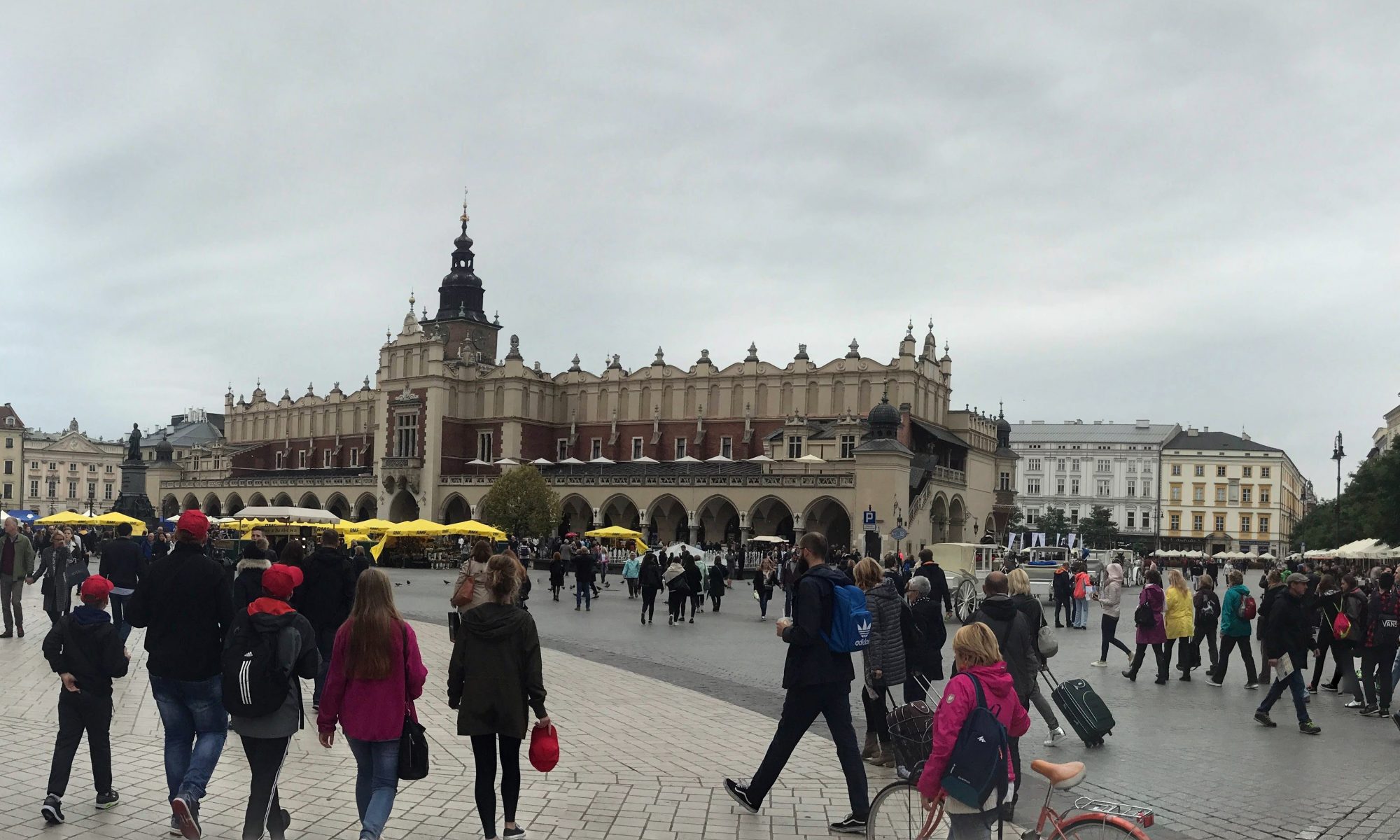
We sometimes speak of "global society", we refer to "French society"; and we also think of face-to-face organizations and neighborhoods as small societies or social groups. There is an important conceptual point in the background in these common ways of speaking: what are the features of interaction or relationship that must obtain in order for …
Knowing poverty
Poverty is an important social fact in virtually every society. What is involved in knowing about poverty -- for the citizen, for the poor person, for the social scientist, the historian, and the novelist? To start, there is a set of descriptive and analytical features of poverty. How do we define the concept of being …
What people know
It is interesting to consider what kinds of social knowledge people need in their everyday lives. This is clearly a question of scale. At the proximate and local level, people need to know how to interact with local social practices and institutions. We need to know how to behave in the doctor's office, police station, …
China’s cultural revolution
What is involved in understanding China's Cultural Revolution? The question comes to mind for several reasons -- but most vividly because of a recent interview in France in the le nouvel Observateur with Song Yongyi. Song's personal itinerary is historic -- he was a "rebel Red Guard" in 1967, a political prisoner in China from …
Agency, action, and norms
How do norms influence behavior? More fundamentally, what is a norm? The question arises for two separate reasons. First, we are interested in knowing why people behave as they do (agency). And second, we are interested in knowing how large social factors (moral and cognitive frameworks, for example) exert influence over individuals (social causation). The …
Are there discrete social mechanisms?
McAdam, Tarrow and Tilly direct our attention to the level of the concrete social mechanisms that recur in many instances of social contention (Dynamics of Contention). They specifically refer to escalation, radicalization, brokerage, and repression as examples of social mechanisms that produce the same effects in the same circumstances, and that concatenate into historical processes …
Marc Bloch’s history
One of the historians whom I most admire is Marc Bloch. He was one of France's most important medieval historians in the first half of the twentieth century, and he died at the hands of the Gestapo while serving in the Resistance in Paris in 1944. (Carole Fink's biography is an outstanding treatment of his …
New forms of collective behavior?
Personal electronic communication and the Internet -- have these new technologies changed the game for collective action? Here I am thinking of email and instant messaging, but also cell phones and other personal communications devices, as well as the powerful capacity for dissemination of ideas over the web -- has this dense new network of …
Explaining technology failure
Technology failure is often spectacular and devastating -- witness Bhopal, Three Mile Island, Chernobyl, the Challenger disaster, and the DC10 failures of the 1970s. But in addition to being a particularly important cause of human suffering, technology failures are often very complicated social outcomes that involve a number of different kinds of factors. And this …
Processes versus structures
Comparative historical sociology seeks to provide an answer to this type of question: what causes certain kinds of large historical outcomes? And it proceeds, often, on the basis of controlled comparison of a small number of cases. Theda Skocpol's classic book, States and Social Revolutions: A Comparative Analysis of France, Russia and China, is a …
 Understanding Society