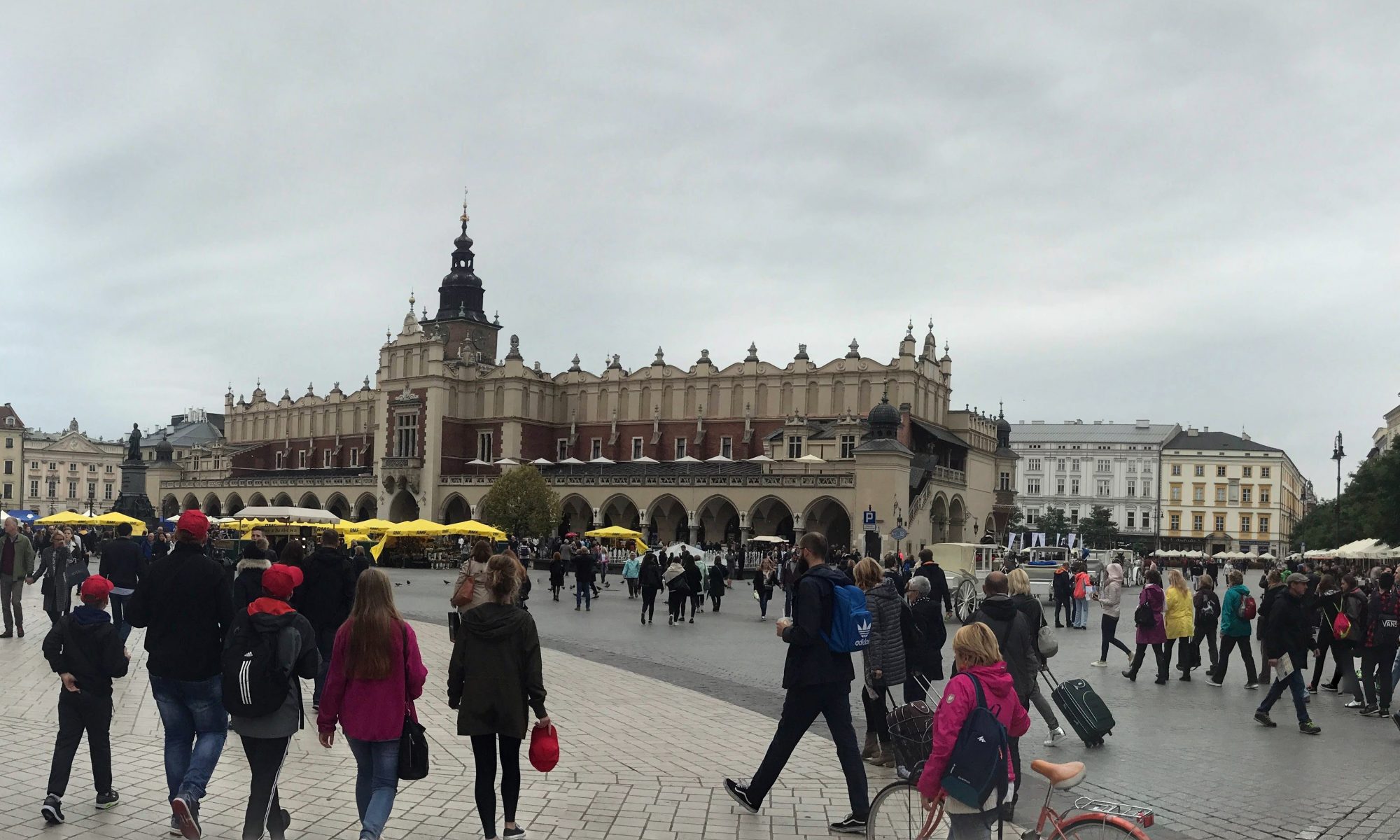
One of the benefits of attending international conferences is meeting interesting scholars from different countries and traditions. I had that pleasure while participating in the Asian Conference on Philosophy of the Social Sciences at Nankai University in June, where I met Chaiyan Rajchagool. Chaiyan is a Thai academic in the social sciences. He earned his …
Retelling US history
images: Frederick Douglass and Abraham Lincoln (from Jill Lepore, These Truths) People who mostly learned American history through their high school education have a limited view of the topic. It was a view that paid little attention to the concrete social issues of race, gender, or class in American history. Fortunately there is now a …
James Scott on the earliest states
In 2011 James Scott gave a pair of Tanner Lectures at Harvard. He had chosen a topic for which he felt he had a fairly good understanding, having taught on early agrarian societies throughout much of his career. The topic was the origins of the earliest states in human history. But as he explains in …
Cold war history from an IR perspective
Odd Arne Westad's The Cold War: A World History is a fascinating counterpoint to Tony Judt's Postwar: A History of Europe Since 1945. There are some obvious differences -- notably, Westad takes a global approach to the Cold War, with substantial attention to the dynamics of Cold War competition in Asia, Africa, Latin America, and the …
Collapse of Eastern European communisms
An earlier post commented on Tony Judt's magnificent book Postwar: A History of Europe Since 1945. There I focused on the story he tells of the brutality of the creation of Communist Party dictatorships across Eastern Europe (link). Equally fascinating is his narrative of the abrupt collapse of those states in 1989. In short order …
Dynamics of medieval cities
Cities provide a good illustration of the ontology of the theory of assemblage (link). Many forms of association, production, logistics, governance, and population processes came together from independent origins and with different causal properties. So one might imagine that unexpected dynamics of change are likely to be found in all urban settings. The medieval period …
Chinese modernization c. 1930
At the end of the nineteenth century -- which was also of the end of the Qing Dynasty -- China was not "modern". Its political institutions had crumbled, it had not substantially incorporated new technologies and forms of economic organization, and its military was still equipped with mid-century weapons and tactics. And, of course, the …
Snippets from the Roman world
image: Arch of Septimius Severus, Forum (203 CE) The history of Rome has a particular fascination for twenty-first century readers, especially in the West. Roman law, Roman philosophy, Roman legions, and Roman roads all have a powerful resonance for our imaginations today. Mary Beard's recent SPQR: A History of Ancient Rome is an interesting recent synthesis of …
Perspectives on transport history
I view transport as a crucial structuring condition in society that is perhaps under-appreciated and under-studied. The extension of the Red Line from Harvard Square (its terminus when I was a graduate student) to Davis Square in Somerville a decade later illustrated the transformative power of a change in the availability of urban transportation; residential …
Hofstadter on the progressive historians
I've frequently found Richard Hofstadter to be a particularly compelling historian of American politics and ideas. He is one of the writers from the 1950s and 1960s who still have insights that repay a close reading as we try to make sense of the swirling complexities of culture, politics, and ideas. His earliest book is …
 Understanding Society