Karl Marx Imagined The social world is more complex and heterogeneous than most parts of the natural world, with diverse causal processes, different tempos of change, and multiple influences on a given outcome of interest. If we want to understand, say, why American psychiatry came to have the institutions and prescriptions that it currently has …
Ethnography of high-energy physics
MICE, Muon Ionisation Cooling Experiment, team at the facility during construction at STFC's Rutherford Appleton Laboratory, 11th February 2015. The experiment is designed to demonstrate the concept of ionisation cooling of muons to maximise the number of muons available for acceleration, storage and the eventual production of neutirnos in a Neutrino Factory. Science proceeds through …
“Rigorous” sociology
There is sometimes an inclination within the social sciences to unify and "improve" the methodologies of the social sciences to allow them to be "fully scientific" in the way that chemistry or physics were thought to be in the neo-positivist phase of the philosophy of science. With something like these ambitions Klarita Gërxhani, Nan D. …
Defining disciplinary research in the social sciences
The "historical turn" in the philosophy of science in the 1960s and 1970s gave most of its attention to the development of the physical sciences -- especially physics itself. (See Tom Nickles' essay "Historicist Theories of Scientific Rationality" in the Stanford Encyclopedia of Philosophy for a detailed account of this development in the philosophy of science; link.) Historian-philosophers …
Continue reading "Defining disciplinary research in the social sciences"
Social science study of the Holocaust
image: "Mapping the SS Concentration Camps," Geographies of the Holocaust (Anne Kelly Knowles, Tim Cole, and Alberto Giordano, eds.) The complex realities of the Holocaust are now more than seventy-five years in the past. And yet the history, causes, and variations of this nightmare period have not yet been adequately understood (link). An excellent recent …
Vienna Circle in Emerson Hall
I am enjoying reading David Edmonds' The Murder of Professor Schlick: The Rise and Fall of the Vienna Circle, which is interesting in equal measures in its treatment of the rise of fascism in Austria and Germany, the development of the Vienna Circle, and -- of course -- the murder of Schlick. Edmonds' presentation of the …
A big-data contribution to the history of philosophy
The history of philosophy is generally written by subject experts who explore and follow a tradition of thought about which figures and topics were "pivotal" and thereby created an ongoing research field. This is illustrated, for example, in Stephen Schwartz's A Brief History of Analytic Philosophy: From Russell to Rawls. Consider the history of Anglophone philosophy …
Continue reading "A big-data contribution to the history of philosophy"
Academic social media
The means through which academics engage in communication and discussion of their ideas have changed significantly in the past decade through the rapid growth of the importance of social media in the dissemination of new ideas. Social media platforms like Twitter, Facebook, Medium, Blogger, Tumblr, and WordPress have become important media for communication in a …
Rob Sellers on recent social psychology
Scientific fields are shaped by many apparently contingent and capricious facts. This is one of the key insights of science and technology studies. And yet eventually it seems that scientific communities succeed in going beyond the limitations of these somewhat arbitrary starting points. The human sciences are especially vulnerable to this kind of arbitrariness, and …
Sustaining a philosophy research community
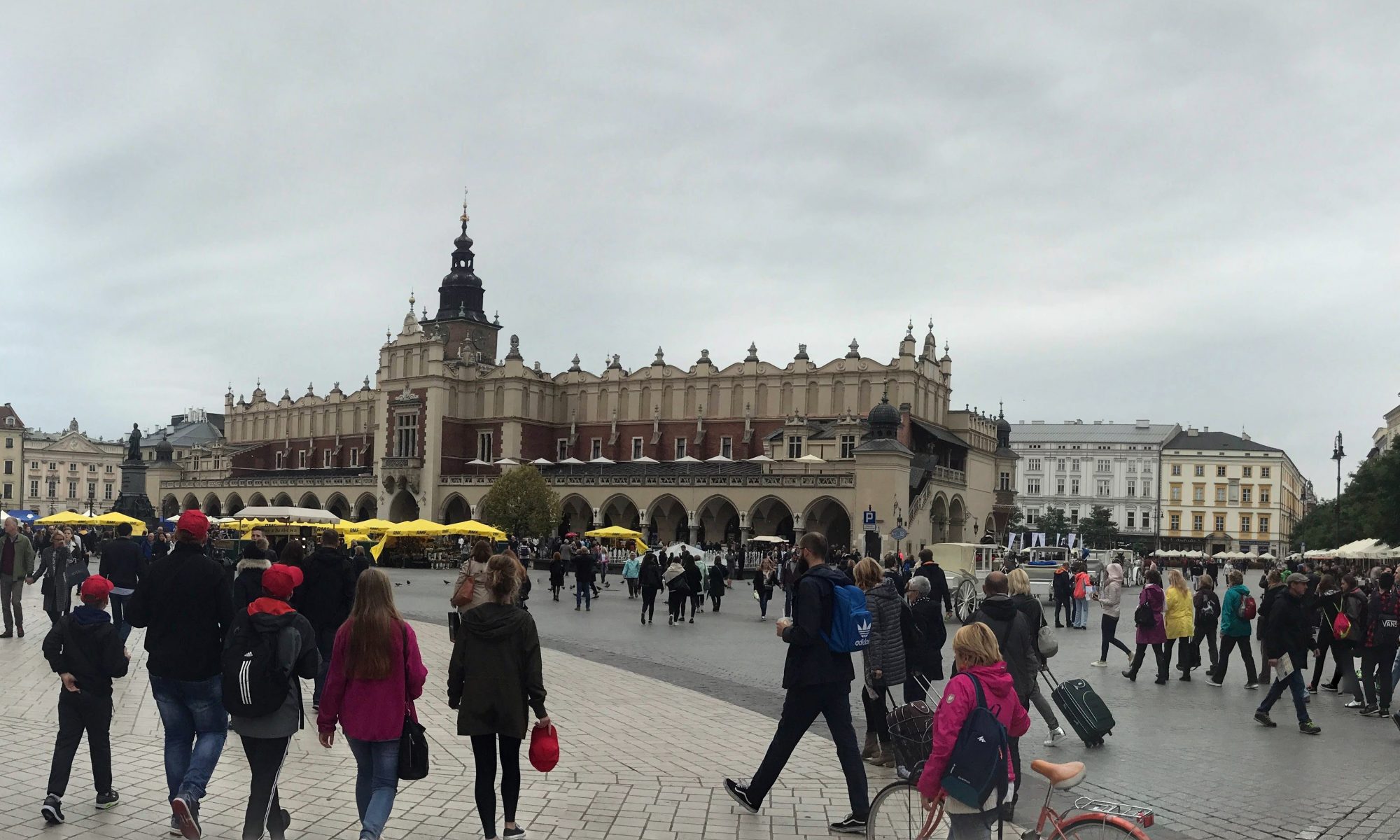
The European Network for Philosophy of Social Science (ENPOSS) completed its annual conference in Krakow last week. It was a stimulating and productive success, with scholars from many countries and at every level of seniority. ENPOSS is one of the most dynamic networks where genuinely excellent work in philosophy of social science is taking place …
Continue reading "Sustaining a philosophy research community"
 Understanding Society