Popper and Parfit: the minds of philosophers

Derek Parfit hit the philosophy firmament in the early 1960s, while Karl Popper arrived on the Vienna scene three decades earlier. David Edmonds' biography of Parfit provides a careful and detailed account of Parfit's main philosophical preoccupations and some details about his life in Parfit: A Philosopher and His Mission to Save Morality. Popper's autobiographical …

Defining disciplinary research in the social sciences

The "historical turn" in the philosophy of science in the 1960s and 1970s gave most of its attention to the development of the physical sciences -- especially physics itself. (See Tom Nickles' essay "Historicist Theories of Scientific Rationality" in the Stanford Encyclopedia of Philosophy for a detailed account of this development in the philosophy of science; link.) Historian-philosophers …

Reasoning for sociological theory

What is involved in providing a compelling and justified formulation of an abstract theoretical concept in sociological theory? When we engage in theorizing about human action and the social world, we would like our statements to be rationally grounded in some specifiable sense; we would like to be able to offer evidence and reasons for …

Scientific rationality and anomaly

Some discussion of the empirical status of social science theories and hypotheses in the past has revolved around Karl Popper's formulation of the doctrine of falsifiability. However, this criticism is almost always misplaced in the context of the social sciences. This is true for several reasons: sociologists rarely offer unified deductive theories of social phenomena; …

Five easy pieces (for the social sciences)

Social scientists are generally interested in "explaining" social outcomes: why did such-and-so take place as it did? Why did the Indochina War occur, and why did it end in the defeat of two modern military powers? Why did the French fail so miserably at Dien Bien Phu? Why was the Tet Offensive so consequential for …

The Malthusian problem for scientific research

It seems that there is a kind of inverse Malthusian structure to scientific research and knowledge. Topics for research and investigation multiply geometrically, while actual research and the creation of knowledge can only proceed in a selective and linear way. This is true in every field -- natural science, biology, social science, poetry. Take Darwin. …

How things seem and why

The idea that there is a stark separation between many of our ideas of the social world, on the one hand, and the realities of the social world in which we live is an old one. We think "fairness and equality", but what we get is exploitation, domination, and opportunity-capture. And there is a reasonable …

Social science and policy

One of the important reasons that we value scientific knowledge is the possibility that it will allow us to intervene in the world to solve problems that we care about. Good climate science allows us to have high confidence in the causes of global climate change; and it also provides a sound basis for policy …

Sustaining a philosophy research community

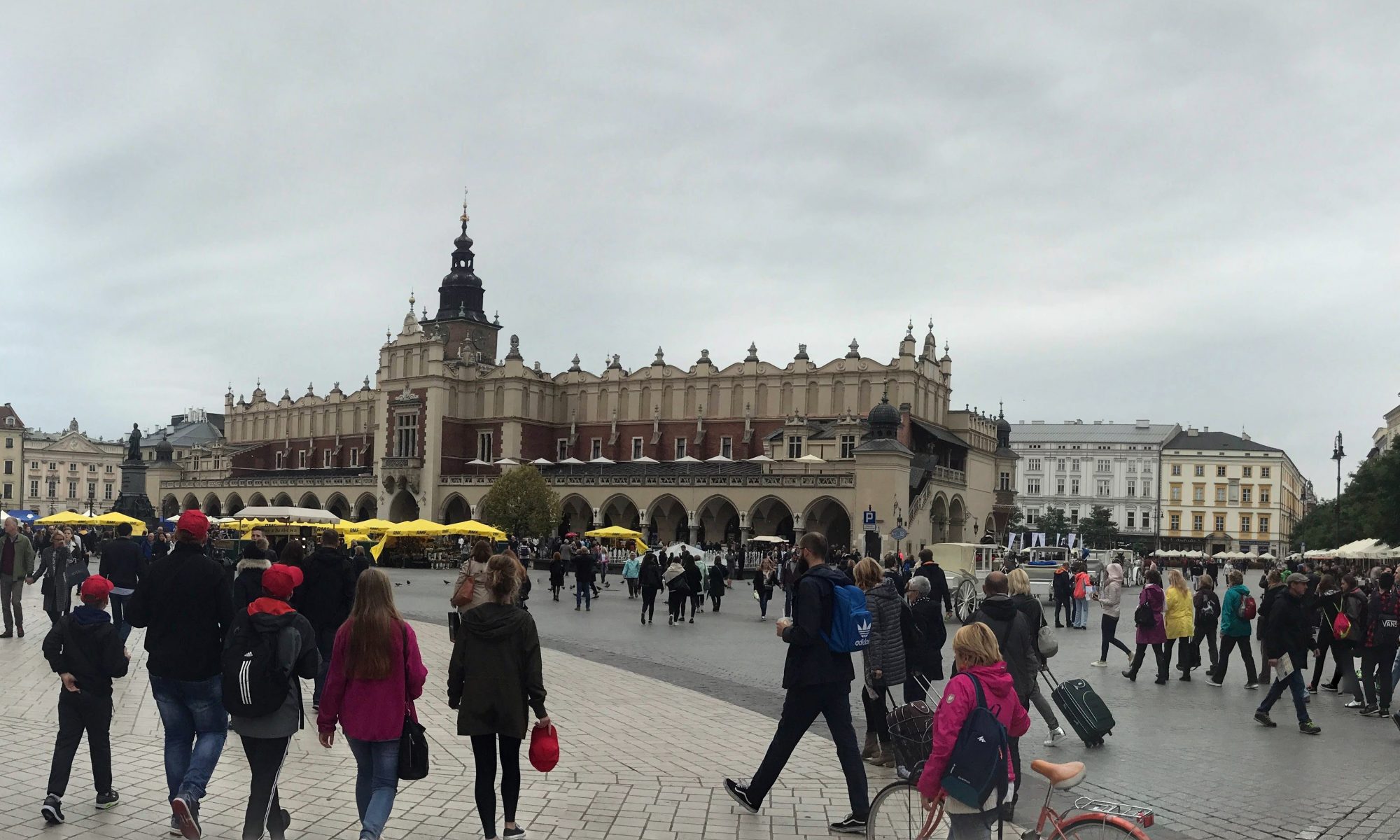
The European Network for Philosophy of Social Science (ENPOSS) completed its annual conference in Krakow last week. It was a stimulating and productive success, with scholars from many countries and at every level of seniority. ENPOSS is one of the most dynamic networks where genuinely excellent work in philosophy of social science is taking place …

Time for a critical-realist epistemology

The critical realism network in North America is currently convened in Montreal in a three-day intensive workshop (link). In attendance are many of the sociologists and philosophers who have an active interest in critical realism, and the talks are of genuine interest. A session this morning on pragmatist threads of potential interest to critical realists, …