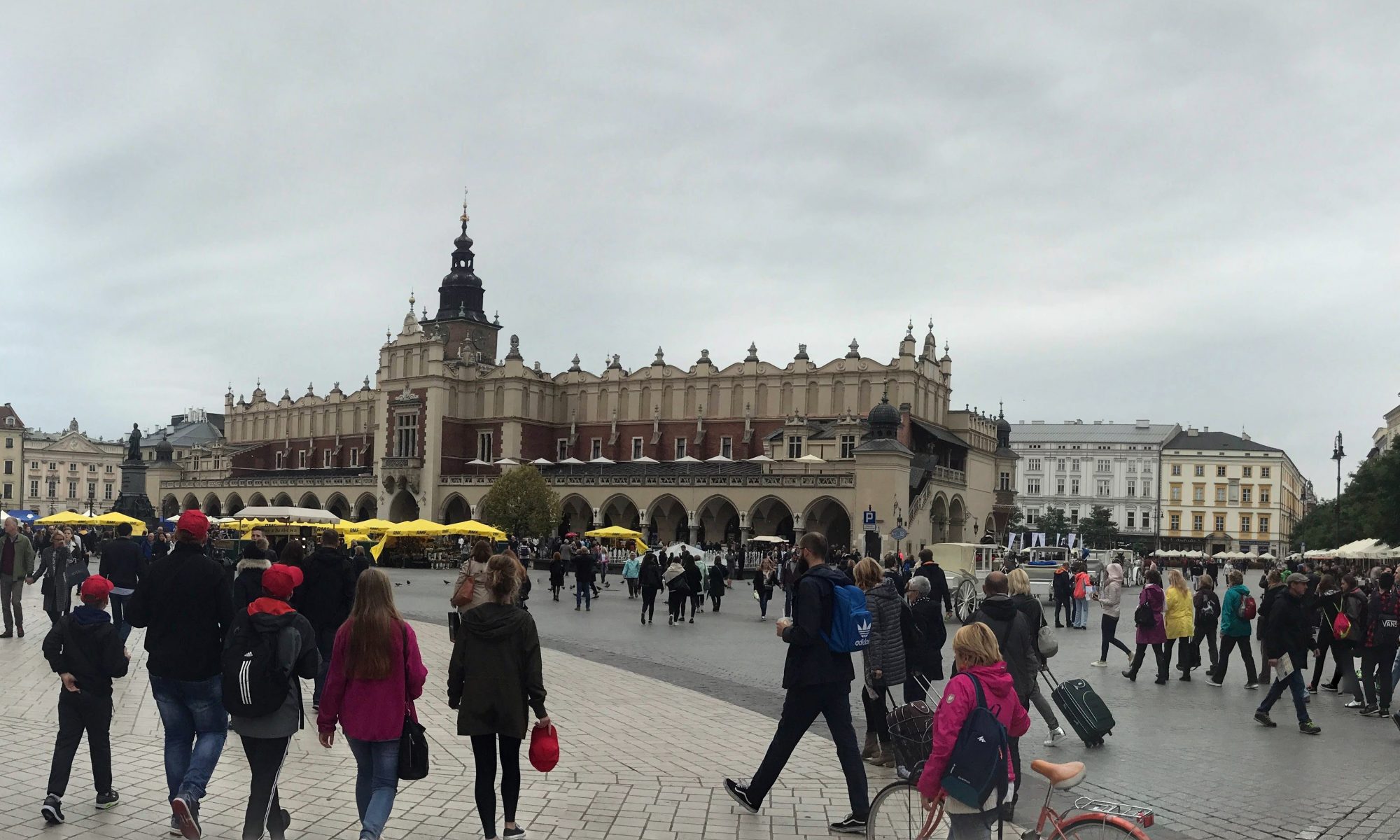
Our social ontology needs to reflect the insight that complex social happenings are almost invariably composed of multiple causal processes rather than existing as unitary systems. The phenomena of a great social whole -- a city over a fifty-year span, a period of sustained social upheaval or revolution (Iran in the 1970s-1980s), an international trading …
Heterogeneity of the social
I think heterogeneity is a very basic characteristic of the domain of the social. And I think this makes a big difference for how we should attempt to study the social world "scientifically". What sorts of things am I thinking about here? Let's start with some semantics. A heterogeneous group of things is the contrary …
Explaining rodeos
Suppose we have visited quite a few rodeos in Arizona and Texas and have observed a couple of things: there are more injuries in rodeos than in stock car racing or football, the stakes for the winners are lower than in golf, the rodeo riders score higher than average on the "introverted" component of the …
How much of social life can be explained?
How much of social life can be explained? It may sound like a strange question -- surely everything can be explained! And it's true that nothing that occurs is "inexplicable". But consider this homely example: if I spill my coffee on the desk, is there a scientific explanation of the particular shape that the splash …
Continue reading "How much of social life can be explained?"
The reality of society
We sometimes speak of "global society", we refer to "French society"; and we also think of face-to-face organizations and neighborhoods as small societies or social groups. There is an important conceptual point in the background in these common ways of speaking: what are the features of interaction or relationship that must obtain in order for …
Chaos and coordination in social life
Much social behavior is chaotic, in that it simply emerges from the independent choices of numerous agents during a period of time. It is analogous to Brownian motion -- particles in a liquid moving in random motions as a result of innumerable bumps and pushes at the molecular level. However, there are also many patterns …
The flea market analogy
Is the flea market a helpful analogy for understanding the social world ("The Dis-unity of Science")? Does it serve to provide a different mental model in terms of which to consider the nature of social phenomena? What it has going for it is heterogeneity and contingency, and an obvious share of agent-dependency. The people who …
What is to explain about violent crime?
Every city has a crime rate -- the incidence of murders, assaults, car thefts, or burglaries per 100,000 residents. And there are very significant differences across cities and countries with respect to the incidence of violent crime. In particular, some cities in the world experience extremely high levels in the incidence of violent crimes (for …
Social properties: Persistence, change, and stochastic social processes
How can we explain social change and social persistence? Society is a complex, compositional entity. Both persistence and change require explanation in such entities. Because there is a third alternative condition of such an entity: chaos, randomness, and Brownian motion of individuals in interaction with each other. Succinctly -- the current state of the ensemble …
Continue reading "Social properties: Persistence, change, and stochastic social processes"
The heterogeneous social: groups
A social whole -- the city of Chicago, for example -- is a densely various empirical reality. At virtually every level of scale there is variance with respect to social characteristics -- income, health status, ethnic or social identity, political adherence and preference, age, race, or occupation. Neighborhoods differ from each other -- but equally, …
 Understanding Society