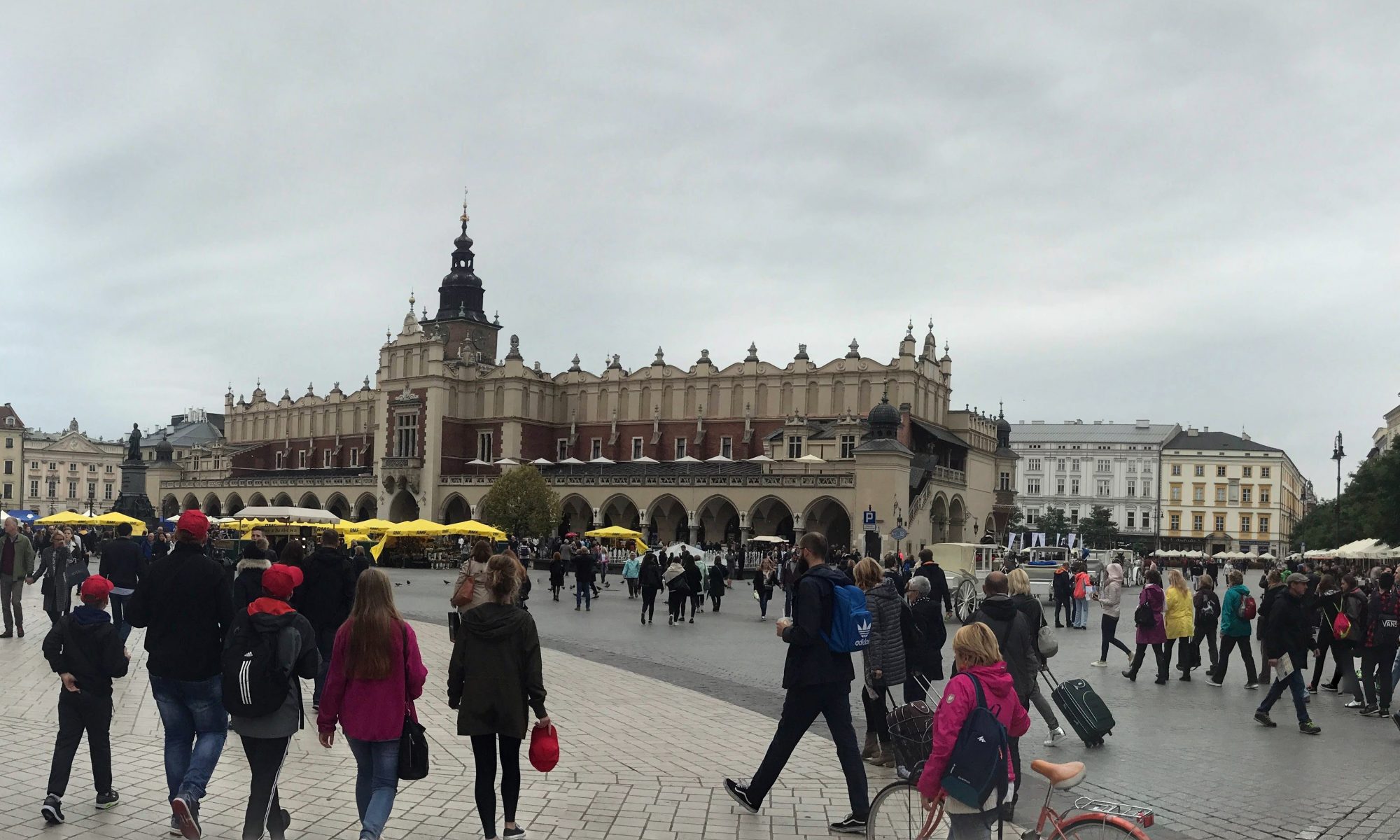
Bauman on the Holocaust

There sometimes seems to be an important intertwining between personal biography and a person's sociological and historical imagination. Zygmunt Bauman (1925-2017) was a Jew of the generation in Poland who were destined to die -- most did in his generation of Polish Jews -- and he was exposed at various times to the murderous regime …

Jedwabne as memory and history

In July 1941 a terrible massacre of Jews took place in Jedwabne, a town in eastern Poland. The town consisted of some 3,000 residents, about half of whom were Jewish. On July 10, 1941, weeks after the German army took control of the town from the Soviet Red Army (according to the terms of the …

Decline of democracy in India

The entrenched rule of the BJP and its leader, Narendra Modi, has led to a truly alarming degradation in India's democratic institutions (link). Hindu nationalism and the degradation of citizenship rights for Muslims and other non-Hindus; the rise of paramilitary violence in cities; the repression of non-compliant students and academics through violence and the threat …

Fourteen years of Understanding Society

Greetings, readers... This week marks the fourteenth anniversary of Understanding Society. With this post there are 1,412 entries in the blog -- about 1.4 million words. The blog began on November 2, 2007, with a post on the topic of the plasticity of the social -- a theme that has persisted to the present. Here is …

How are institutions sustained, reproduced, and changed?

Institutions are "supra-individual", in the sense that they establish a context of identity and mental-framework formation for all individuals, and they create the environment of choice for the current actions of individuals. Further, they exercise an influence that is beyond the control of any particular individual or group of individuals. But at the same time, …

Telling the truth about genocide and totalitarian terror

A central question in the past year or so in Understanding Society is how historians and philosophers should confront the evils of the twentieth century. It seems clear that studying these processes fully and honestly is a key part of the answer, both for scholars and for ordinary citizens. We need to confront the truth about ugly …

United States after the failure of democracy

Democracy is at risk in the United States. Why do leading political observers like Steven Levitsky and  Daniel Ziblatt (How Democracies Die) fear for the fate of our democracy? Because anti-democratic forces have taken over one of America's primary political parties -- the GOP; because GOP officials, governors, and legislators openly conspire to subvert future …

Human cultures as self-creating systems

Some philosophers and others have imagined that human beings are largely fixed in their most fundamental capacities -- their "human nature". Along with this idea is the notion that there are fundamental ethical and moral principles that are unchanging and serve always as guides to human action -- and, perhaps, that philosophical ethics or theology …

Fire safety in urban China

A rapidly rising percentage of the Chinese population is living in high-rise apartment buildings in hundreds of cities around the country. There is concern, however, about the quality and effectiveness of fire-safety regulation and enforcement for these buildings (as well as factories, warehouses, ports, and other structures). This means that high-rise fires represent a growing …

Ludwik Fleck and “thought styles” in science

Let's think about the intellectual influences that have shaped philosophers of science over the past one hundred years or so: Vienna Circle empiricism, logical positivism, the deductive-nomological method, the Kuhn-Lakatos revolution, incorporation of the sociology of science into philosophy of science, a surge of interest in scientific realism, and an increasing focus on specific areas …