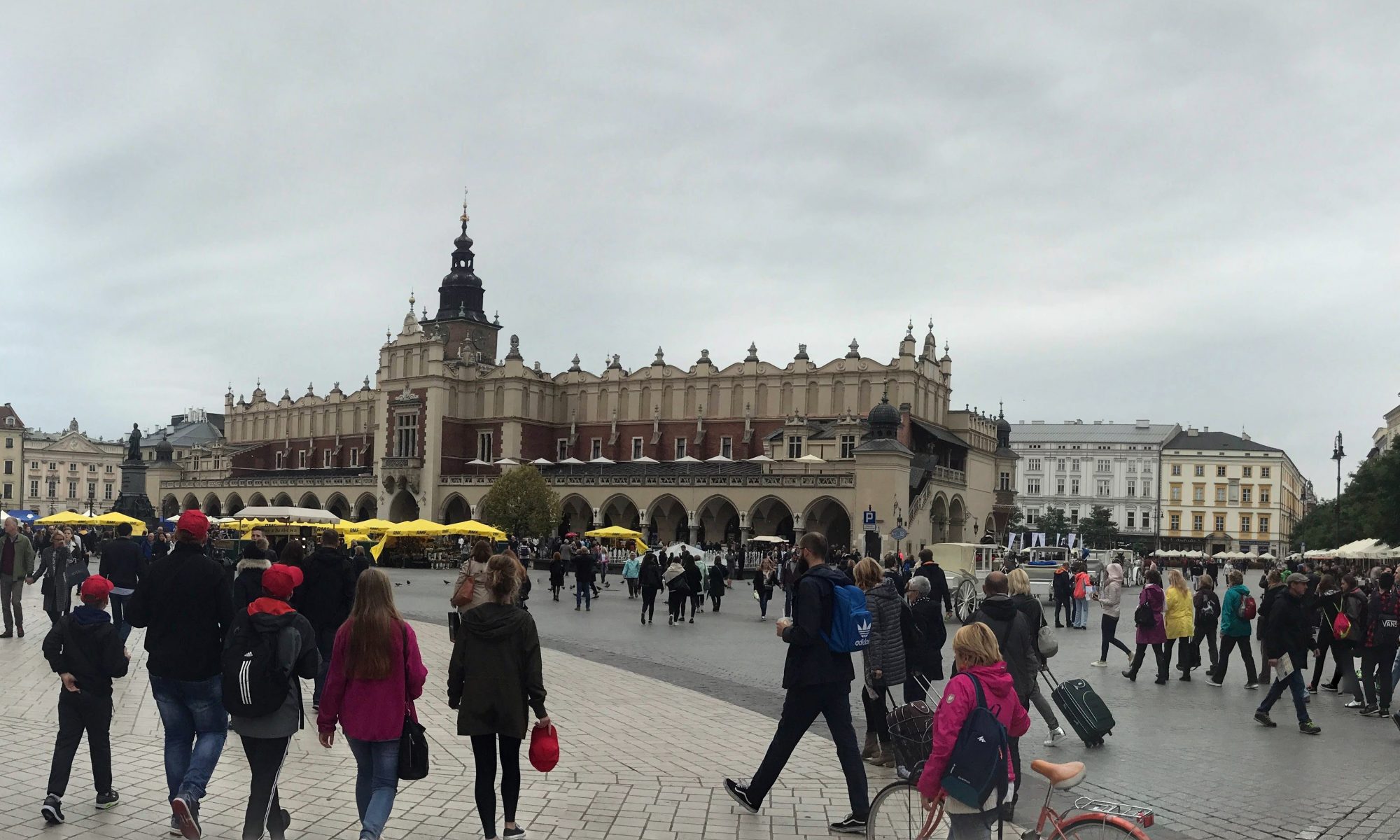
Cities provide a good illustration of the ontology of the theory of assemblage (link). Many forms of association, production, logistics, governance, and population processes came together from independent origins and with different causal properties. So one might imagine that unexpected dynamics of change are likely to be found in all urban settings. The medieval period …
Contingency and explanation
Social change and historical events are highly contingent processes, in a specific sense: they are the result of multiple causal influences that "could have been otherwise" and that have conjoined at a particular point in time in bringing about an event of interest. Contrast this situation with what we are looking for when we seek …
A new model of organization?
In Team of Teams: New Rules of Engagement for a Complex World General Stanley McChrystal (with Tantum Collins, David Silverman, and Chris Fussell) describes a new, 21st-century conception of organization for large, complex activities involving thousands of individuals and hundreds of major sub-tasks. His concept is grounded in his experience in counter-insurgency warfare in Iraq. Rather than being …
Chinese modernization c. 1930
At the end of the nineteenth century -- which was also of the end of the Qing Dynasty -- China was not "modern". Its political institutions had crumbled, it had not substantially incorporated new technologies and forms of economic organization, and its military was still equipped with mid-century weapons and tactics. And, of course, the …
Morphogenesis and social norms
Critical realism pays particular attention to the enduring structures that underlie various social orders and processes. But as argued in an earlier post, CR also needs to be able to provide a vocabulary for describing the "subjective" and normative aspects of the social order. Margaret Archer's evolving theory of morphogenesis provides resources for discussing precisely …
Jobs, basic income, and the future of the techno-market economy
In the dystopian vision of the future described in William Gibson's Sprawl novels, there are few people with normal jobs, regular sources of income, retirement plans, and health insurance. Instead, there are hackers, freelance security guards, software traffickers, criminals at many levels, and a few distant corporations with scientists and managers. It is a grim …
Continue reading "Jobs, basic income, and the future of the techno-market economy"
Guest post by Guus Duindam
Guus Duindam is a J.D./Ph.D. student in philosophy at the University of Michigan. His primary areas of interest are Ethics and Kant. Thanks, Guus, for providing this rigorous treatment of Bhaskar's philosophical argument for critical realism. Bhaskar contra Kant: Why Critical Realism is not Transcendental Realism Let me start by thanking Dan Little for inviting …
Sociology of life expectations
Each individual has a distinctive personality and orienting set of values. It is intriguing to wonder how these features take shape in the individual's development through the experiences of childhood, adolescence, and early adulthood. But we can also ask whether there are patterns of mentality and orienting values across many or most individuals in a …
Explanation and critical realism
To explain something is to provide a true account of the causes and circumstances that brought it about. There is of course more to say on the subject, but this is the essential part of the story. And this normative account of explanation should work as well for investigations created within the framework of critical realism as …
Cacophony of the social
Take a typical day in a major city -- a busy street with a subway stop, a park, a coffee bar, and a large consumer financial office. There are several thousand people in view, mostly in ones and twos. Some people are rushing to an appointment with a doctor, a job interview, a drug dealer …
 Understanding Society