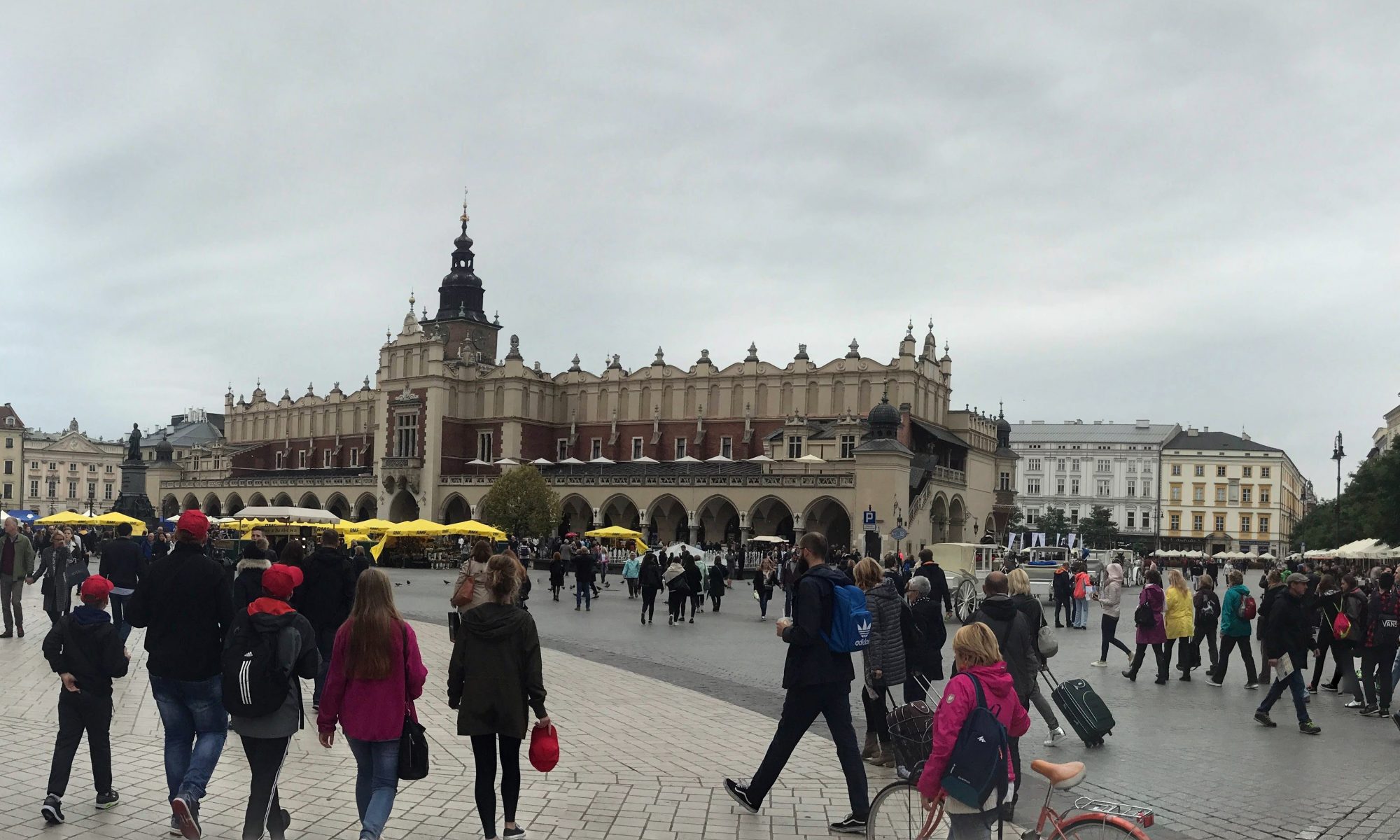
How important is cooperation in a market society? First, what is cooperation? Suppose a number of individuals occupy a common social and geographical space. They have a variety of individual interests and things they value, and they have outcomes they'd like to bring about. Some of those outcomes are purely private goods, and some can …
Why the corporation?
image: Diego Rivera mural of Rouge Plant, Detroit Institute of the Arts Recently I posted about C. Wright Mills and his analysis of power elites in America (post). A major theme in Mills's book is the new power associated with the American corporation following World War II. Charles Perrow's Organizing America: Wealth, Power, and the …
Patient safety — Canada and France
Patient safety is a key issue in managing and assessing a regional or national health system. There are very sizable variations in patient safety statistics across hospitals, with significantly higher rates of infection and mortality in some institutions than others. Why is this? And what can be done in order to improve the safety performance …
Social mobility?
We often think of the United States as a place with a lot of social mobility. What exactly does this mean? And is it true? Ironically, the answer appears to be a fairly decisive "no." In fact, here's a graph from a 2005 New York Times series on income mobility that shows that the United …
Internet activism in China
Guobin Yang's The Power of the Internet in China: Citizen Activism Online is a boundary-breaking book. It is a sociology of the communities who use the internet in China; it is a contribution to the study of social movements; it is a history of a recent period of China's modern history during which internet activism …
Power elites after fifty years
When C. Wright Mills wrote The Power Elite in 1956, we lived in a simpler time. And yet, with a few important exceptions, the concentration of power that he described continues to seem familiar by today's standards. The central idea is that the United States democracy -- in spite of the reality of political parties, …
Polanyi on the market
Karl Polanyi's The Great Transformation is a classic statement of a polar position in the issue of the universality of instrumental rationality and market institutions in explaining concrete historical circumstances in the recent and distant past. Polanyi maintains that the concept of economic rationality is a very specific historical construct that applies chiefly to the …
Marx’s theory of political behavior
Marxism is concerned with the politics of class: the success or failure of working class organizational efforts, the occurrence of collective action in defense of class interests, the logic of working class electoral politics, and the occurrence of revolution. Marx attempted to analyze and explain a variety of political phenomena--e.g., the forms that working class …
Cultural authenticity and the market
Images: cover illustration from Anthony Appiah, In My Father's House; Chinese neolithic pot c. 1500 BC People often return from their travels with objects they've purchased to represent the culture and traditions of the place they've visited -- Alsatian pottery from Betschdorf, masks from Kenya, or Navajo pots from Arizona. And sometimes they purchase such …
Microstructure of strife
Let's work backwards in thinking about sustained inter-group violence, and begin by considering some of the street-level incidents that constitute a period of violence against or between groups. What factors are necessary to the occurrence of inter-group violence in a region? And how can an understanding of these factors contribute to better strategies of conflict …
 Understanding Society