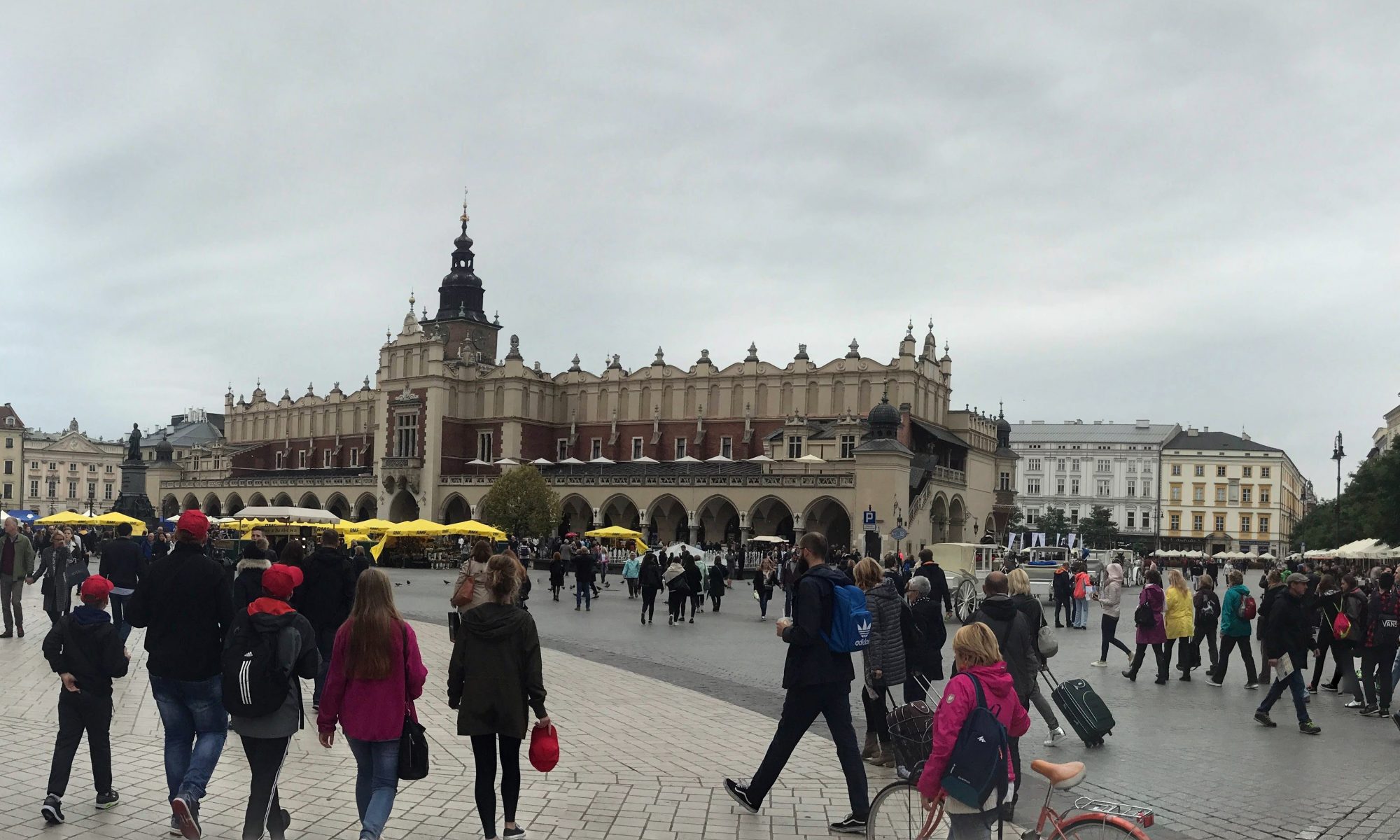
It is often said that culture change within an organization or workplace is difficult -- perhaps the most difficult part of trying to reform an organization. What do we mean by this? And why is this so difficult? The daily workings of an organization depend on the activities and behavior of the people who make …
Meso causes and microfoundations
In earlier posts I've paid attention to the need for microfoundations and the legitimacy of meso-level causation. And I noted that there seems to be a prima facie tension between the two views in the philosophy of social science. I believe the two are compatible if we understand the microfoundations thesis as a claim about …
Social mechanisms and meso-level causes
(This post summarizes a paper I presented at the British Society for the Philosophy of Science Annual Meeting in 2012.) Here and elsewhere I want to defend the theoretical possibility of attributing causal powers to meso-level social entities and structures. In this I follow a number of philosophers and sociologists, including many critical realists (e.g. …
Social structures and causal powers
The idea of a causal power has been appealing to the realist tradition within the philosophy of science, and especially so for the philosophy of social science. Proponents of this idea include Nancy Cartwright (Nature's Capacities and Their Measurements), Margaret Archer (Realist Social Theory: The Morphogenetic Approach), and Dave Elder-Vass (The Causal Power of Social …
Institutional design for democracies
How can we design practical, effective, and fair institutions for making the basic decisions that are needed within a democratic government? This is, of course, one of the oldest questions in democratic theory; but it is also a recent concern of Jon Elster's. Under this rubric we can investigate, for example, the ways a legislature …
Levels of the social
We can examine social life at many levels of granularity -- from ordinary individual social behavior to small groups to cities and regions to the global system of communication and extraction. Is there any basis for thinking one level is better than another for the social sciences? There are two kinds of considerations that might …
Mohamed Cherkaoui on the micro-macro debate
The eminent French sociologist Mohamed Cherkaoui addresses the problem of delineating the micro-macro distinction in several works. Since Cherkaoui's empirical research on social stratification and the educational system seems often to bridge between micro and macro, his views are of interest. Cherkaoui's analysis is presented in English primarily in three places, "The individual and the …
Continue reading "Mohamed Cherkaoui on the micro-macro debate"
Gradual institutional change
Here are some very fundamental questions that we can ask about social institutions -- the relatively durable sets of rules, practices, and norms through which a variety of human social activity is conducted. How are institutions formed? How do they work -- what are the enforcement mechanisms that exist within institutions that induce participants to …
Organizations and strategic action fields
image: Hierarchical modularity of nested bow-ties in metabolic networks, Jing Zhao, Hong Yu, Jian-Hua Luo, Zhi-Wei Cao and Yi-Xue Li (link) Neil Fligstein and Doug McAdam provide a full exposition of their theory of strategic action fields in A Theory of Fields. As observed in an earlier post, this theory presents an innovative way of …
Continue reading "Organizations and strategic action fields"
Crozier on actors and organizations
I ran across a book by Michel Crozier and Erhard Friedberg I hadn't read before in a Dijon bookstore, L'acteur et le système: Les contraintes de l'action collective (French Edition). (Yes, in France they still have great academic bookstores!) It was the book's title that caught my eye -- "actor and system". Crozier and Friedberg's premise …
 Understanding Society