Social consciousness and critical realism

Critical realism proposes an approach to the social world that pays particular attention to objective and material features of the social realm -- property relations, impersonal institutional arrangements, supra-individual social structures. Between structure and agent, CR seems most often to lean towards structures rather than consciously feeling and thinking agents. And so one might doubt …

Community resilience

We know what is meant by saying that a physical system is resilient: for a given range of shocks, the system has the ability to recover its structural integrity. This does not mean that a resilient system is impervious to shocks, but rather that it is capable of recovery from a given range of shocks …

Sustaining a philosophy research community

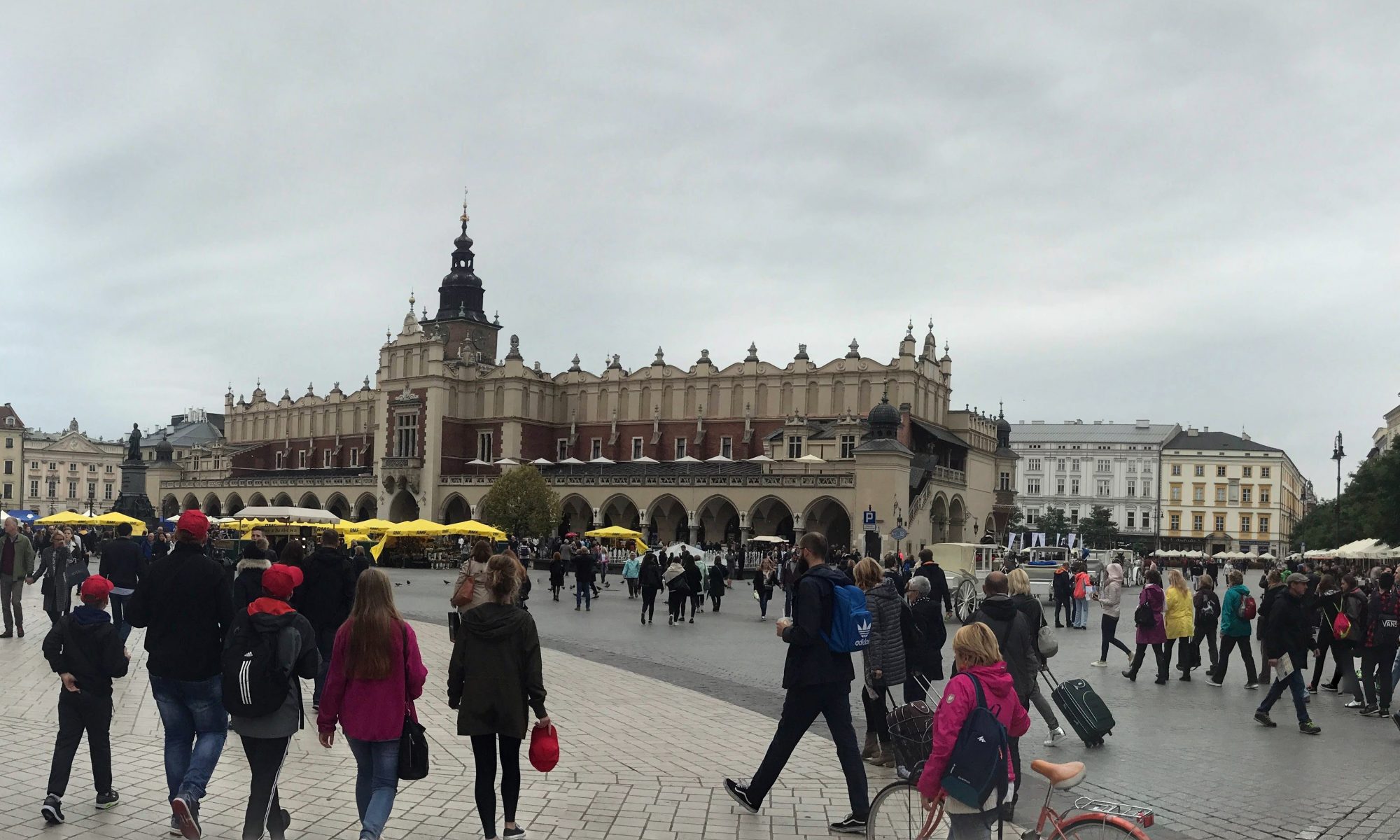
The European Network for Philosophy of Social Science (ENPOSS) completed its annual conference in Krakow last week. It was a stimulating and productive success, with scholars from many countries and at every level of seniority. ENPOSS is one of the most dynamic networks where genuinely excellent work in philosophy of social science is taking place …

Experiencing the Holocaust

When we think we know about an historical event -- the French Revolution, the Spanish Civil War, the Jim Crow years in America -- generally what we know is a limited and miscellaneous set of facts, impressions, interpretations, and summaries we have gathered through many avenues -- monographs, novels, films, poetry, historical lectures in college. …

Worker-owned enterprises as a social solution

Consider some of the most intractable problems we face in contemporary society: rising inequalities between rich and poor, rapid degradation of the environment, loss of control of their lives by the majority of citizens. It might be observed that these problems are the result of a classic conundrum that Marx identified 150 years ago: the …

Responding to hate

The Southern Poverty Law Center documents that hate groups and hate-based mobilization are on the rise in the United States (link, link). Here is a current map of hate-based groups monitored by SPLC: Through provocative epithets, slogans, and extremist demonstrations a variety of hate groups -- white supremacists, neo-Nazis, anti-muslim bigots, anti-immigrant activists, anti-LGBTQ extremists, …

Erik Olin Wright on real utopias

Erik Olin Wright is one of the genuinely important contributors to a progressive sociology in the United States. He was one of the first wave of social scientists and philosophers who created the movement of analytical Marxism in the 1970s and 1980s, and for more than thirty years he has organized much of his own …

New thinking about causal mechanisms

Anyone interested in the topic of causal mechanisms will be interested in the appearance of Stuart Glennan and Phyllis Illari's The Routledge Handbook of Mechanisms and Mechanical Philosophy. Both Glennan and Illari have been significant contributors to the past fifteen years of discussion about the role of mechanisms in scientific explanation, and the Handbook is …

Guest post by Dave Elder-Vass

[Dave Elder-Vass accepted my invitation to write a response to my discussion of moral realism (link). Elder-Vass is Reader in sociology at Loughborough University and author of Profit and Gift in the Digital Economy, The Causal Power of Social Structures: Emergence, Structure and Agency and The Reality of Social Construction, discussed here, here and here. Dave has emerged as a leading voice in …

Moral progress and critical realism

Critical realists share a rejection of the fact-value distinction as a fundamental criterion of scientific rationality -- and rightly so (link). They believe that social research and theorizing involve value commitments all the way down. Further, they commonly believe that good social science should lead to improvement in the world and in our system of …